
Category: Longform
You are viewing all posts from this category, beginning with the most recent.
Death cult
OBR: We have to kill old people and starve the children of the poor in order to keep funding our expensive wars and ensure the rich get richer.
Labour: Let’s get to it!
The Office for Budget Responsibility’s forecast for the national debt is a worthless exercise by economically illiterate fantasists https://www.taxresearch.org.uk/Blog/2024/09/13/the-office-for-budget-responsibilitys-forecast-for-the-national-debt-is-a-worthless-exercise-by-economically-illiterate-fantasists/ The Office for Budget Responsibility has forecast that UK debt will rise to 300% of GDP in 50 years because they think it impossible that taxes can rise above current levels, even though state spending will reach 60% of GDP in their opinion. All they prove is their own lack of imagination and competence by doing so.
Funny old game
In the good old days, football was a simple game. You had eleven players and a substitute numbered 1 to 12, no shirt advertising, a referee and two linesmen, a manager, a trainer, a physio, a scout or two, tea ladies, drinking culture, long hair and perms, the club chairman, a board of directors, a club secretary, a groundsman, a stadium in the beating heart of the town or city, fans, standing room only, electric atmospheres, matches on Saturday at three o’clock, live coverage on the radio, match reports in the Pink Final after the game, and highlights on Match of the Day at 10:30 the same night. Tradition and history.
These days, it’s big business. You’ve got a hundred players in the first team squad, shirt number bingo sponsored by online sports betting companies, the reserves, the academy, a women’s team, out on loan, transfer windows, exiled due to poor man-management, five, seven, nine subs to choose from, a referee and a substitute referee, assistant refs, refs sat in an office in a business park (a clear and obvious error), refs at home, refs in the studio, refs in the crowd, a manager, a head coach, a goalkeeping coach, various other specialist coaches, multitudes of doctors, physios, psychologists, data analysts, worldwide scouting networks, dieticians, head chefs, gambling addictions, agents, chief executives, directors of football, technical directors, presidents of business, heads of legal, heads of state, matches at any time from noon to after the last train home, an advertiser’s stadium out of town, sitting room only, live streaming all day and all night. Profit and sustainability.
At one time, a manager of a football club could expect to run all aspects of the club to a lesser or greater degree, or at least have a major say in how it was run. Nowadays, managers, or coaches, are often restricted to, well, coaching players in training and on match days, and speaking to the media before and after games. They are seen as specialists rather than all-rounders, and more specialists from the world of corporate finance are brought in to fire the tea ladies and keep the manager - sorry, coach - fully focused on his job and not get distracted by wheeling and dealing in the transfer market, player contracts, or appealing points deductions for spending beyond the club’s means.
United
Indeed, this is how United plc’s Dan Ashworth keeps Eric ten Hag successful on the pitch. Oh, wait. I’m no fan in particular of Jamie Carragher, but he might have had a point when described United last season as one of the most poorly coached sides in the Premier League. United’s usual set up is a chaotic mismatch of players out of form, out of position, out of confidence, and out of luck. Individual errors rule the day, and most of the players look lost and like they’d rather be in the physio room or gambling rehab. We rely totally on one player - Bruno - to create chances and score. This is a colossal failure of recruitment, of management, of coaching, of captaincy, of teamwork.
Fergie took six seasons to win the title after twenty six years of hurt, and three seasons after winning the cup in 1990. His team often looked like it wasn’t making any progress, but the cup win did see a consistent marked improvement season on season (13th to 6th to 2nd to 1st). Ten Hag produced a masterful cup win against all the odds, although perhaps City’s players were caught off guard expecting an easy win after United’s lucky semi-final win against Coventry. Every season Pep has them playing in a clearly identifiable system and is never afraid to switch players or tactics.
Ingerland
It’s funny to hear Morgan Gibbs-White talk about Ingerland’s new interim manager Lee Carsley and describe his qualities as basically being a father-figure. Most top-level professional footballers are with their clubs from the age of eight, and likely spend more time than most kids away from their families and any normal childhood - living the dream, nonetheless. You can understand why they would value this kind of man-management, someone who will stick up for them no matter what.
Ten Hag hasn’t got that about him at all. He’s lost a whole load of players in one way or another because he didn’t have the heart or the head or the guts to stand by them when they needed him. De Gea, Maguire, Wan Bissaka, Casemiro, McTominay, Sancho, Antony, Martial, Rashford, Greenwood.
The spineless corporate bosses meanwhile took an age to decide the safest bet was to keep ten Hag. Failure is expected and gives them half a season at least to bed themselves in and some new players, too, in time for a new manager. If he does well, then they made the right decision. If they had appointed a new manager he might have failed, too, with the current players, and that would have reflected badly on the corporate bosses.
At least we’re not Chelsea. Telling your captain that he’s not technically good enough. Successfully scraping through the play-off round of the Conference League. Moneyball gone mad (although they could have a decent team in three seasons…).
TV Show of Interest
Finally got around to watching the pilot episode of Person of Interest last night. Took a little while to get going and I almost gave up. Not a comedy at all, but I couldn’t help feeling it was somehow a little like Minority Report meet Police Squad!, and not in a bad way.
Only another 102 episodes to go…
Academics in Europe are continuing to work with Chinese counterparts on “clearly problematic” artificial intelligence #AI research in areas like biometric surveillance, cybersecurity, and military fields, a new analysis has found. https://sciencebusiness.net/news/ai/europe-still-working-china-military-and-surveillance-uses-artificial-intelligence-report
____This is why I chose to rewatch #PersonOfInterest recently. By the end of season 3 a true hellscape is unleashed.
Spuds Up!
We harvested the last three of eleven potato bags at the weekend. A decent crop, and very tasty.
Highlights were regular watering and earthing up (using homegrown compost) with my kids, and big kid’s tenth birthday party where his friends got to (among other fun activities) harvest the first three bags and take home a potato bag each.
Fond memories of going potato picking with my mum in the Lincolnshire Wolds in the early 1970s.


Election Fever
My inbox is full of people asking for my opinion and personal experience of this UK general election campaign and who to vote for.
(Un)fortunately, as I sat down to type the words from my fingertips, my four year old decided he needed to express his thoughts instead.
It’s obviously not to scale (he’s only four!), but you can clearly see the Labour supermajority in red, and the Tory wipeout in blue. That they are a ‘uniparty’/two cheeks of the same backside is encapsulated in the red triangle atop the blue square in the centre.
The Green surge in vote share (in green, on the left) isn’t reflected in seats won, of course. In pink, you can see the rise of the independents, black is the Workers Party, and to the far right (in grey) is Reform.
The Lib Dems are an irrelevance (except in the South West) in yellow (this is where we had to stop, as he got very upset at the lack of orange).

The Cuckoo's Nest
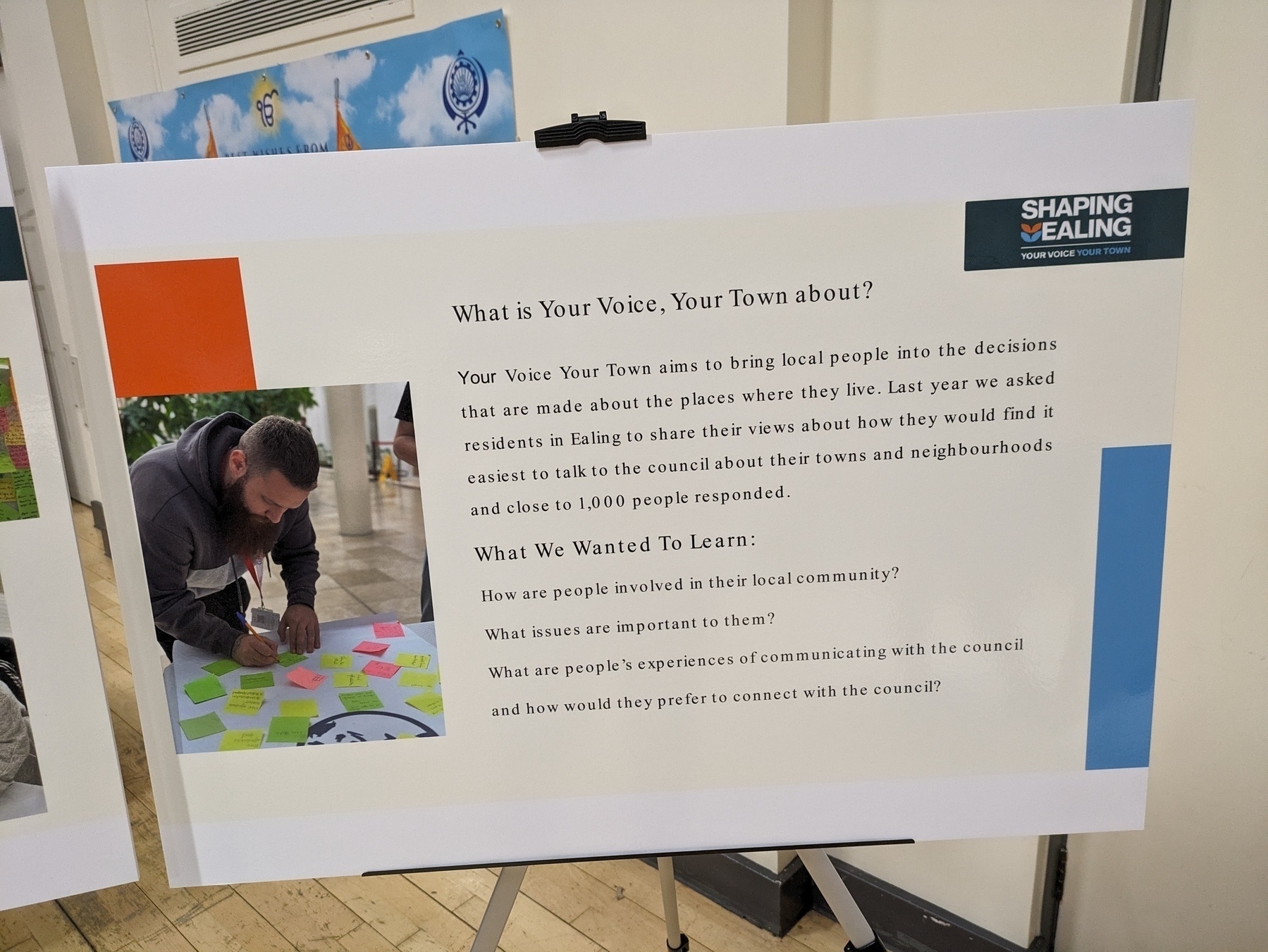
Ealing Genocide Supporters Club (aka Ealing Labour Party) held their Southall Branch meeting yesterday at the Dominion Centre in Southall. Under the guise of a “Your Town, Your Voice” community get together, our local elected repellents gathered on masse in all their finery. I couldn’t help myself as they posed for a group photo all gurning inanely as the photographer encouraged them to “say cheese!”. “Say genocide!” I offered. “Genocide supporters!”
Cllr Dr Murtaza of their number aggressively reprimanded me. “What evidence do you have that we support genocide?” he demanded to know. Well, I told him, my main piece of evidence would be that you have done nothing to oppose it.
Ooh! There’s Cllr Martin! Our locally elected anti-Traveller racist! “What evidence do you have to support that?” Well, here it is.
Oh, and while you’re at it, Cllr Dr Murtaza. Next time you are chauffeuring our glorious leader around in your Porsche, try not to park in a cycle lane, please.
Then there was illegal samosa factory proprietor Cllr “I own half of Southall” Anand.
I hadn’t realised until yesterday quite how visceral my revulsion for these people is. The grand cuckoo in the nest arrived about half way through the event. I would have confronted him myself, and previously I have done. Maybe I was just worn down from a week with the ‘flu, but I felt like I really had to keep my distance for my own sanity. In any case, a few council officers made beelines for me and made sure I was busy answering their questions.
Interestingly, one officer suggested to me that resident-led ward forums would be the likely outcome of this event. Fantastic news, if that’s the case. Another officer I spoke to later, knew nothing about this idea, though, but took copious notes. A neighbour and friend told me that she spoke to the cuckoo himself who told her that this meeting was in fact the replacement for he old (councillor-led) ward forums. That’s that then.
The event itself was a repeat of several resident[pdf] surveys and failed plans over the past twenty years or so (for which I’ve seen records, or taken part in). The problems are always the same. The responses from the council are always the same. Nothing.



Fear and Loathing
I spent the best part of nine months in America in 1989-90 on an international student exchange programme. It was an experience I’ll never forget, mostly good, and certainly an eye opener.
There was a bit of a last minute faff getting my visa (I had misunderstood the requirements) and by the time I got to Gatwick Airport I was shitting bricks, having never flown or been abroad before. Lockerbie was also still fresh in the memory.
The plane I was on just happened to be Virgin Atlantic’s inaugural flight from Gatwick to JFK, and so we had the unpleasure of Richard Branson sexually assaulting us in stockings and suspenders to celebrate.
On arrival in the US, I had no clue what to do other than to get a “limousine” to Farmington, CT, and then a taxi from there. I had my dime for the phone call ready.
The limousine was a coach, and we arrived in a deserted Farlington coach terminal at 2 am. I found a phone booth, put in my dime and called a taxi. The operator couldn’t help me and hung up. There goes my dime! Why didn’t I have a Plan B dime? Fuck! Somehow, I managed to call another taxi and got to my student digs on campus at CCSU in New Britain.
It all felt utterly surreal to me then, like being stranded on another planet, adrift in my bunk bed, alone in the halls of a spacecraft, listening to the crickets and the ghostly sounds of train horns. From the initial induction for international students - “Americans can be outwardly incredibly friendly to strangers, and will almost certainly invite you to come to their house anytime for dinner. Whatever you do, don’t go! They won’t be expecting you!” - to the imposing vastness of the country and people, I was warned to expect culture shock.
Everything was big to me then, which meant that I felt small and insignificant. I found it hard to adapt and got so homesick that I booked a flight home for Xmas and New Year just to see my family and friends again. I didn’t really want to go back afterwards.
But I had already had some amazing experiences. My roommate, Mark, was totally into active outdoor life and we went climbing locally at Ragged Mountain, which was an exhilarating first for me climbing to the top of a cliff. Then we set up a ridiculously ambitious plan to climb Long’s Peak in the Colorado Rockies during the Thanksgiving holiday. We failed because we got hit by what was thankfully just a two day a blizzard as we set up our tents at basecamp. Once safely back down and showered, we had a massive breakfast at Ed’s Cantina in Estes Park the next morning before going skiing (another death-defying first for me).
Mark is still cycling, skiing, hiking and living off his memories of later climbing Mount Everest while selling toilets to pay for it all (which is funny in itself as I have never met anyone who can fart and burp constantly like he did back then). Mark’s wilderness pal Mike is still in the wilderness, and is now also a published author on the significance and synchronicity of owls as messengers from other worlds or dimensions in time and space.
We regularly ate at Pizza World in Farmington, where they made the biggest and best spinach and ricotta calzones. We drank pitchers of beer at Elmer’s, and got free slices of fresh pizza every evening at 10:30.
I trained with the Blue Devils' soccer team (with one eye on getting fit for our Colorado expedition), and made number 26 (out of 11) on the team, which featured multiple Geordie, Irish, and European failed pros on soccer scholarships, and coached by a Geordie and an ex-Bristol City player.
A group of us Internationals set up a satirical student magazine (A Connecticut Wanker) produced on a very early Apple Macintosh computer.
I even got to have a go on the student radio one morning and played Fools Gold by Stone Roses to our mystery audience.
That reminds me, Steve Albini’s untimely death yesterday - when I got back to the UK, I tried to get involved in the student union magazine and wrote a condemnatory piece about the naming of Albini’s new band Rapeman. I got slaughtered by the hipster editorial team for being unhip and not being into Marmalade, and I held a grudge against Albini ever since (despite grudgingly enjoying his work as a producer). So it was with mixed feelings that I read yesterday that he had recently noted the error of his ways as a young man and sought to hold his hands up and acknowledge his white male privilege.
When I somewhat reluctantly returned to the states in January, I ended up having such a blast I didn’t want to leave when my visa expired and tried (and failed) to get a new one so I could stay and work. We did more skiing (in Killington, Vermont), and watched Nelson Mandela walk free on the hotel TV. (Almost exactly thirteen years later, I watched in shock and awe as the US bombed Baghdad back to the Stone Age on the hotel TV while on a skiing trip in France).
We did Spring Break in Miami, and the Florida Keys, but especially Key West.
We took a road trip to New Orleans via the Appalachian Trail, Memphis and the Mississippi. And we finished off with a road trip delivering a car from Boston to LA, taking in the Mesa Verde, and the Grand Canyon, along the way.
We did day trips to New York and Washington, DC.
When I say “we” in all of the above, we were a group of international students, quite a few of us English, but with some French, German, Italian, Cypriot, Bangladeshi and Canadian people in the group, too. Not everyone went on every trip, but I did.
We split up in Santa Monica as my two travelling companions wanted to go to San Diego, while I wanted to go to San Francisco (and I had run out of money, so my plan was to get a flight back to New Britain from there, and then on to my flight home to the UK). I ended up literally walking around San Francisco for a week with no money and staying in the cheapest hostel I could find. I spent quite a bit of time sitting on the dock of the bay looking at Alcatraz and the Golden Gate Bridge.
One memory that always stuck in my mind was talking to a business professor at CCSU. I think I had signed up for his class before quickly dropping it because he insisted on too many formalities in his classroom that I felt had nothing to do with learning or even business (although what do I know about the latter?). Anyway, for some reason I can’t remember, this professor ended up explaining to me just how fearful, and loathing, and downright paranoid he was about unAmericans who - in his words - were “all out to get us”.
I didn’t really understand it then, I was just left gobsmacked that anyone could really feel like that in the richest and most powerful country in the world. But on the other hand, I knew that most of the Americans I had met had never travelled beyond their state borders, and never learned anything of the world outside of the US, and mostly were solely concerned with getting their degrees while having one massive keg party. A surprising (to me) number of female students were already married (or engaged to be married), and all wore so much make-up on a daily basis it’s like they were auditioning for Real Housewives sixteen years before it aired on TV.
The Israeli genocide of Palestinians in Gaza and a recent quote from a Jewish man born and raised into Zionist culture made me think about my paranoid professor and his culturally repressed students and the American people more generally, as it is the United States of America that is paying for and arming Israel. The US is, of course, founded by religious extremists fleeing persecution in their homelands, and who then inflicted genocide on the native American peoples as they colonised and settled on their lands. It’s a white European, male supremacist culture, very similar to Zionism, so it’s really no wonder the two are inextricably allied.
Two Little Ducks
Along with thirty-odd other parents, I saw my nine year old off on his big adventure this morning, a school trip away to Wales for three nights. Everyone was super excited and nervous, and so were the kids.
The teachers accompanying them were super-organised. We’d had several in-person meetings prior, as well as countless Dojo messages and crumpled lists stuffed into school backpacks telling what to pack and what not to bring.
One teacher checked all the kids into the school hall and gave everyone an identifying number to stick on their top. Another checked in all the sealed and named daily medication bags. A third handed out school prepared packed lunches. A fourth mingled giving out reassurances as required.
The coach arrived on time, and the teacher who handed out the numbered stickers announced that children would go to the bus in groups of five according to the names and numbers he read out - a bit like child bingo. Everyone put their suitcase in the hold and carried their backpack and themselves on to the bus. Finally they were all ready to go!
Mingling teacher then asked if anyone needed to go to the toilet before they set off, and I swear thirty-odd kids all got off the bus and went an did their last minute business before (hopefully) all getting back on board. A quick hand count (“only raise one hand each”), and the coach drove out of the school grounds to waves and sobs from parents.
A few minutes later, little Abdul emerged from the boys toilet… (well, I didn’t hang around to see that, I just hope that didn’t happen).
What Marxism teaches us
What Marxism teaches us is simply to approach questions of society from a material basis: how does human life persist? Through production of the goods and services needed to live.
How are these things produced under capitalist society? Through exploitation of the labor of the working class, that is, by requiring one class of people to sell their labor as a commodity to another class to produce values.
What is the result of this system? That workers are “alienated” from their labor, meaning from much of their waking life, constantly required to produce more and more with an ever-precarious access to the means of subsistence.
Via Jacobin.
Stop the Planes
My wife was born in Uganda. She’s Black, like our kids. She came to the UK when she was five.
She’s just told me she feels like she should put herself on a plane to Rwanda.
Then she said she realised she came here legally, she has indefinite leave to remain, and she’s a British citizen.
I asked her what was it that made her feel like she should deport herself.
Unsurprisingly, she said it’s because of all the anti-immigration rhetoric in the news. As she said,
It’s obvious no one wants my Black face here.